What is the biopsychosocial model? Does asking about worry mean my pain is being dismissed?
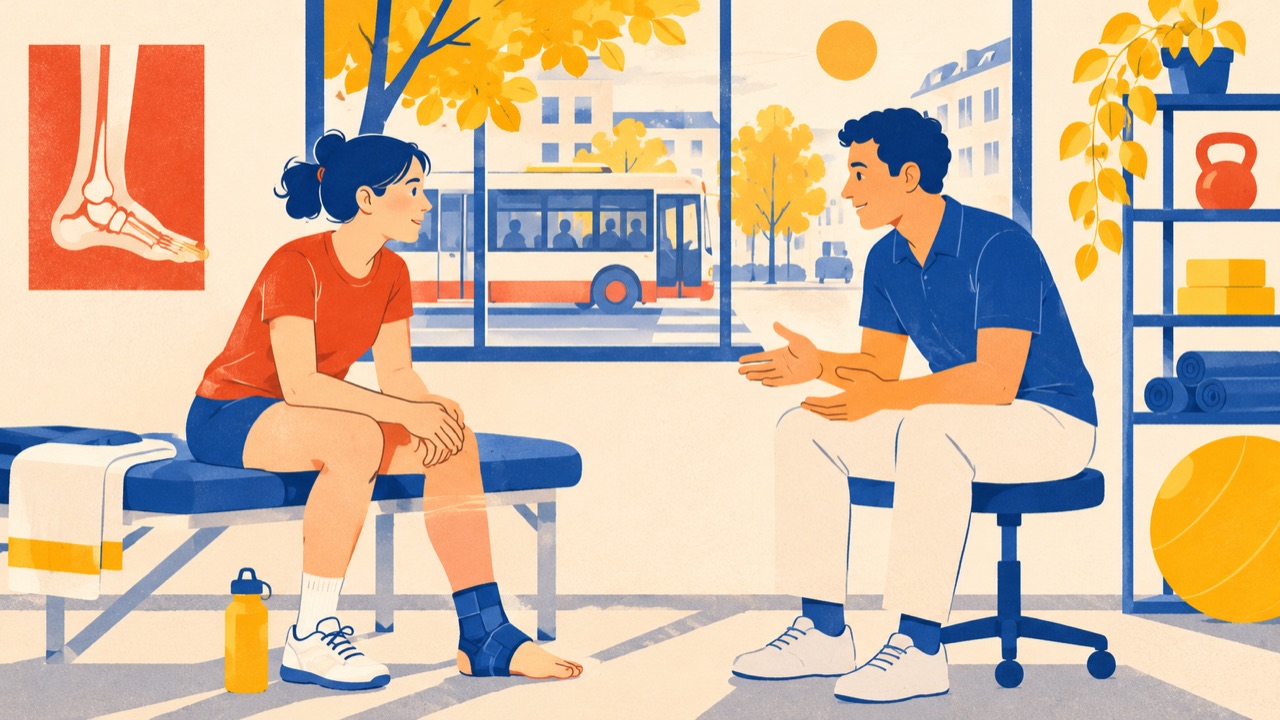

“My foot hurts. Why are we talking about work?” Without an explanation, the question can sound like a diversion. The starting point should be clear: your pain is a real experience. Asking what worries you is not a test of resilience or a substitute for examining your foot. The International Association for the Study of Pain recognises that biological, psychological and social factors influence pain to varying degrees, and that a person’s account deserves respect. IASP: Revised definition of pain
The three words are prompts for questions, not three competing diagnoses. Suppose you have sprained an ankle. Walking around the kitchen is manageable; catching the early bus is not. A biological question is what happened at the time of injury and which movements are still difficult. A psychological question is which moment feels least secure: turning, stepping off the bus, or being jostled. A social question is whether you can travel outside rush hour without losing pay or missing a connection. All three concern the same journey. There is no need to decide what percentage of your pain belongs in each category. IASP: Biopsychosocial approaches to musculoskeletal pain
The answers should make a practical difference. If ankle symptoms have recently worsened, the physical problem needs reconsidering; a conversation about stress cannot replace that. If stepping down is manageable in a quiet room but difficult when someone stops abruptly in front of you, repeating a step in an empty clinic may miss your concern. If a recommended detour means missing your only connecting bus, it is the advice that needs adjusting—not your willingness to cooperate.
You can ask, “Why do you need to know this, and what will you do with my answer?” A useful explanation might be: “You said the step itself feels manageable but being bumped does not. Those are different problems, and I’d like to understand which one we need to address.” The point of the model is to overlook less, not to find another way to blame you for pain.
For education only. Not a substitute for individual assessment or medical advice.