Structure and function: why watch me use the stairs if I’ve already had a scan?
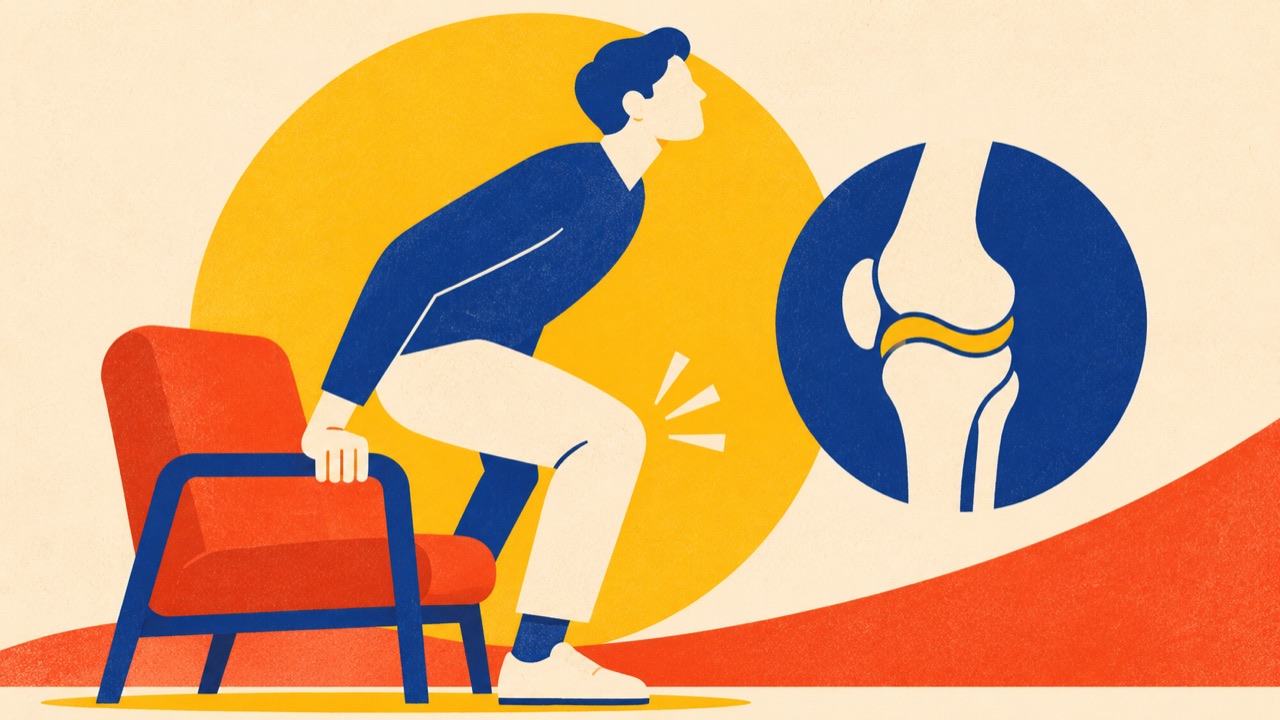

“I’ve brought my scan. Why do you need to watch me walk?” It’s a fair question. A scan can help answer, “What does my knee look like on the inside?” At home, the question may be, “Can I get down four flights carrying the shopping?” Both matter. They are not interchangeable.
There are several ways to describe the same knee. Bones, cartilage, ligaments and tendons are body structures. How far the knee straightens and how much force the thigh can produce are body functions. Getting up from a low sofa or descending a flight of stairs is an activity. Being able to collect your child from school or return to a weekly choir rehearsal is about participation. The WHO’s ICF framework makes these distinctions and also considers the environment. A well-lit staircase with a rail makes different demands from a dark one without a rail, even for the same person. WHO: ICF definitions
What if a test improves but life still feels difficult? Perhaps you can now straighten the knee fully while sitting, yet still struggle to get out of a low bus seat before your stop. The improvement is real; it just hasn’t solved the task that matters. The reverse is possible too. The wording of a scan report might be unchanged even though you can now walk to the bus stop without a lift from your family. That counts as progress. It does not, however, cancel a surgeon’s instructions about protecting healing tissue.
What you retest should follow from what you want to regain. In REPULI’s BAIZE Capacity–Load Clinical Framework, “How much force can this leg produce?” and “What do you need it to do?” are related questions, not a single score. If collecting your child is the goal, a useful comparison might be whether, on the same route with the same bag, you still need to find a seat by the school gate. That is a way to discuss a plan, not a way to diagnose tissue damage from a movement. WHO: ICF practical manual, draft
Bring the report if you have it. Bring something it cannot show as well: “I can get downstairs with my hands free, but not when I’m holding my child’s hand and carrying a bag.” That detail can tell you both what is worth examining next.
For education only. Not a substitute for individual assessment or medical advice.
Everyday examples
A jaw can click while someone eats normally. Someone else changes how they eat because pain or locking interrupts a meal. The sound and the ability to finish eating are separate observations; one does not replace the other or prove the jaw needs putting back in place.
A child may swim a full lesson comfortably and still need planned follow-up of a spinal curve. One observation describes today’s ability; the other asks whether structure changes during growth. Record them separately rather than using sporting performance to grade an X-ray.
A follow-up X-ray addresses bone healing. Watching you turn a key shows how your forearm rotates and whether your fingers maintain a grip. Both assessments can be useful; neither replaces the other.