
Why Can the Same Exercise Feel Different Today?
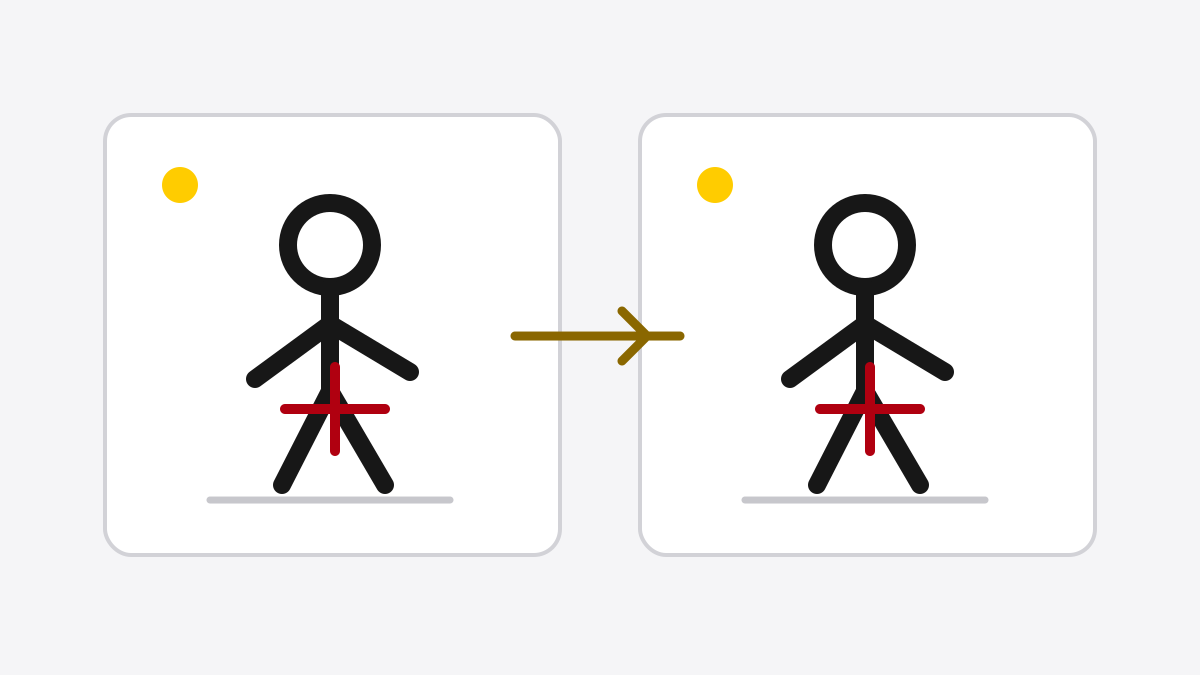
Key points
- Repeating the same named movement does not necessarily mean repeating the same total exposure. Resistance, repetitions, speed, range, rest, movement strategy, fatigue and activity over the preceding day or two may differ.
- A stronger response on one day can be associated with recent cumulative load, recovery, context, attention or natural symptom variability. One response alone does not establish that technique was wrong or that tissue has been newly injured.[1–6]
- Pain can vary within the same person over time. What a change means depends on the condition, function, developmental context and trend; no single pain number explains every situation.[1–3]
- It is often more useful to record function and task quality alongside symptoms, including the response during activity, afterward and before the next session.[4–6]
- BAIZE Capacity–Load Clinical Framework is used here to organize clinical reasoning. It is not a diagnostic tool, risk predictor or fixed score.
A clear answer
The same exercise may feel different today because the movement itself is only one part of the exposure. The load may differ with speed, range, repetitions, rest, fatigue or the activities completed earlier in the day or week. Sleep, work, school, commuting, other training and the recovery available between activities may also be relevant context. In addition, symptoms can fluctuate within the same person.
A larger response does not, by itself, prove that the exercise was performed incorrectly or that a new injury occurred. Put the response into a timeline: note the movement conditions, recent total activity, task quality, daily function and whether the change settles, persists or grows across repeated exposures. A continuing decline in function, a worsening pattern or a new warning sign calls for reassessment. This article focuses on day-to-day response differences; the separate question of when symptom change should prompt screening for a possible new injury is covered in the planned article on symptom fluctuation and reinjury.[1–6]
Why does this question matter?
“I did the same exercise yesterday, so why is it harder today?” can lead to two premature conclusions: “I must have done it wrong” or “I must have damaged something again.” Neither conclusion follows from a single symptom response. The same exercise name does not guarantee identical external or internal load, and one pain rating does not fully describe movement quality, function or medical risk.
This article discusses people already doing rehabilitation who are considering how to interpret a changing response. It does not replace assessment for acute trauma, postoperative restrictions, suspected fracture or bone stress injury, rapidly increasing swelling, inability to bear weight, progressive weakness or numbness, or fever with significant pain. Those situations require appropriate medical advice. The article does not provide a self-diagnosis or a universal pain threshold.
What does the evidence say?
Pain can vary within the same person
A 14-day observational study followed 54 adults with self-reported low back pain recruited from outpatient physical therapy clinics and the community. Daily changes in maladaptive coping and affective responses were associated with changes in pain intensity on the same day.[1] This was an observational study in adults with low back pain; it does not show that emotions caused pain during a particular exercise, and it cannot be generalized to every diagnosis. It does show why repeated observations can reveal a pattern that one average or one isolated rating may miss.
A qualitative systematic review synthesized 32 studies involving 536 adolescents with chronic musculoskeletal pain. Adolescents described frequent fluctuations, but their experiences differed with developmental status, pain condition and duration. The review could not clearly distinguish typical fluctuations from symptom exacerbations or “flares.”[2] This is not an exercise-response rule for every young person. It supports considering school, growth and development, peer activities, family context and sport demands rather than treating adolescents as smaller adults.
“A stronger response” is not one universally defined medical event
A systematic review of flare definitions across burdensome musculoskeletal conditions found that definitions often expanded beyond symptom worsening to include pain, effects on function, joint symptoms and emotional factors. Methods of defining and validating a flare varied by condition, and the authors cautioned that disease-specific elements should not be freely extrapolated.[3] The review examined definitions, not a diagnostic test. In practical terms, a single pain change should not be labelled a flare or a reinjury without considering the condition, function and pattern over time.
Load and recovery involve more than the exercise written on a plan
A narrative review describes how the response to loading can vary across tissues and systems and discusses the interaction of training intensity, volume, frequency, reported responses and objective markers.[4] It is not a patient-level validated algorithm, and examples of tissue-specific recovery periods should not be turned into universal recovery prescriptions. It supports interpreting load-response information in context rather than assuming a fixed response from the exercise name alone.
The International Olympic Committee consensus on load in sport describes load broadly, including training and competition demands, rapid changes, psychological load and travel, and recommends monitoring load and health in athletes.[5] This is an athlete-focused consensus, not a validated risk rule for every rehabilitation patient. It is a reminder that work, study, commuting, household tasks and other training may contribute to the overall context, not evidence that any one of those factors caused a person's symptoms.
Pain during exercise does not have one universal meaning
A systematic review and meta-analysis of seven trials involving 385 people with chronic musculoskeletal pain found a small short-term pain advantage for exercise protocols that allowed or encouraged pain compared with pain-free exercise. It found no clear superiority for medium- or long-term pain, function or disability.[6] The studies were heterogeneous and do not establish a universal pain ceiling, prove that pain should be sought, or support ignoring a worsening response. Symptoms during exercise need to be interpreted with the diagnosis, task, function and subsequent response.
Across these sources, the evidence supports the possibility of within-person symptom variability and the importance of context. It does not identify the cause of a particular person's response on a particular day, nor provide one numerical threshold for everyone.
BAIZE Clinical Interpretation · BAIZE clinical interpretation
The following is clinical reasoning within the BAIZE Capacity–Load Clinical Framework; it is not a formula validated by the studies above.
Capacity profile
- Structural capacity: current diagnosis, postoperative or tissue-specific restrictions, local swelling or tenderness, range of motion and instructions from the treating medical team.
- Functional capacity: strength, endurance, coordination, speed control, movement quality and the ability to complete the daily, work or sport task that matters to the person.
- Biological capacity: disease activity, fatigue, energy availability, medication, general health and local response after training.
- Recovery capacity: whether sleep, rest, commuting, study, work, caring responsibilities, other training and psychological demands leave room to recover from the current load.
Load profile
- Mechanical load: resistance, repetitions, speed, range, impact, support surface, movement complexity and time spent on the task.
- Physiological load: cardiovascular effort, total weekly activity, heat, illness and fatigue.
- Psychological and contextual load: concern about reinjury, competition or examination deadlines, work pressure, travel, attention and the demands of the day.
Clinical hypothesis and decision
Within BAIZE, a clinical hypothesis is that a different response to the same named exercise may reflect a change in the relationship between capacity, load and recovery on that day. One response alone cannot identify which factor changed or establish a cause. The clinician and the person can compare the exposure and its functional consequences before deciding whether to maintain, adjust or reassess the plan.
- First check whether the exposure was actually similar: compare resistance, repetitions, speed, range, rest, compensations, fatigue and total activity in the preceding day or two—not only the exercise name.
- Then review function and the timeline: note the response during activity, several hours later, the next day and before the next session; compare movement quality, the target task and daily function.
- Change only a limited number of variables when appropriate: maintaining, modestly modifying or temporarily pausing one variable can make the response easier to interpret. Do not stop all activity or substantially increase load solely because of one isolated response.
- Reassess when the pattern warrants it: a response that persists, worsens across exposures, or accompanies a meaningful functional decline or new warning sign should prompt clinical review. Detailed screening for possible reinjury belongs to the separate article on symptom fluctuation and reinjury.
Functional Longevity · function across life stages
The long-term goal is not to produce the same pain number every day. It is to build the ability to complete meaningful tasks, adapt when circumstances change and recover over time. The examples below describe contexts, not age-based standards or prescriptions.
- Adolescence: growth and development, school physical education, peer activities and specialized training may all occur in the same week. The context includes school and sport demands, not only the rehabilitation exercise.
- Young adulthood: study, early work, commuting, training and sleep can change together. Feeling more tired today should not automatically be attributed to movement technique.
- Adulthood and midlife: work, parenting, household tasks, travel and long-term exercise can affect recovery opportunities. A meaningful goal may be sustainable participation at work and in activity rather than identical daily output.
- Older adulthood: walking, stairs, carrying, balance, getting outdoors and independent living may matter more than high-intensity measures. Consider safety, endurance and next-day function alongside symptoms.
These examples are not universal ability standards. The World Health Organization's Rehabilitation 2030 initiative frames rehabilitation as relevant across the life course; it is a health-system policy source, not evidence for a particular exercise response or progression decision.[7]
What can a reader take from this?
At the next session, a brief record can make the discussion more useful:
- Was the movement truly the same? Note resistance, repetitions, speed, range, rest and whether you were more fatigued.
- What happened in the preceding day or two? Include work, school, commuting, household activity, other exercise and any change in sleep. These are context, not a self-diagnosis.
- How long did the response last? Record what happened during the exercise, several hours later, the next day and before the following session.
- Did function change? For example, was there a meaningful change in walking, stairs, grip, balance, work or a sport-specific task?
- If there are no warning signs, discuss one adjustment at a time. With the treating clinician, decide whether to maintain, modestly modify or reassess the plan rather than making a major change based on one response.
Seek appropriate medical care for significant new trauma, rapidly increasing swelling or deformity, inability to bear weight, progressive weakness or numbness, fever with significant pain, chest pain or breathing difficulty. Do not use a pain score to rule out these concerns.
For related information, see Pain Has Settled—Why Can’t I Increase My Training Right Away?, the BAIZE Capacity–Load Clinical Framework, sports rehabilitation, the Hangzhou service page, the Beijing service page and the booking section. A link does not imply that a specific clinician, service or appointment time is available.
FAQ
Does a stronger response to the same exercise mean I did it incorrectly?
Not necessarily. First compare the actual resistance, range, speed, fatigue, recent activity and recovery. One stronger response alone does not establish a technique error or a new injury.
Why could I do the exercise yesterday but struggle today?
“Struggle” may mean pain, fatigue, reduced strength, balance, range of motion, attention or a change in the environment. If function keeps declining or the response worsens over repeated sessions, pause progression and arrange reassessment.
Is it normal for rehabilitation symptoms to vary from day to day?
Symptoms can fluctuate within the same person, but “normal” cannot be decided from one pain number alone. The condition, functional impact, duration and trend matter.[1–3]
Why does the same weight feel harder today?
The same external weight does not guarantee the same internal demand. Recent activity, recovery, fatigue, stress and movement efficiency may differ. These are factors to consider, not a diagnosis of the cause.[4,5]
If an exercise sometimes hurts, should I stop all activity?
One response alone does not determine whether all activity should stop. Consider the diagnosis, function and response over time with your clinician. New trauma, marked swelling, inability to bear weight or progressive neurological symptoms need medical assessment. Research on painful exercise does not establish a fixed pain limit for everyone.[6]
Does a larger response after exercise mean the exercise was harmful?
Not by itself. Record when the response began, how long it lasted, whether it affected the target task and what other load was present. A persistent worsening pattern or warning sign calls for reassessment.
Can poor sleep make the same exercise feel harder?
Sleep and recovery may be relevant context for exercise tolerance, but this article cannot establish that sleep caused a particular pain response. Sleep is discussed separately in the planned article on sleep, pain and training tolerance.
Should I record pain or function?
Both can help: note symptom intensity and duration, together with movement quality, the goal task, daily activity and recovery before the next session. One number should not independently decide progression or stopping.
Can BAIZE tell me how much to reduce or add today?
No. BAIZE is a clinical interpretation framework for considering capacity, load and recovery. It is not a self-test, diagnosis, risk predictor or fixed progression formula.
References
- Wesolowicz DM, Bishop MD, Robinson ME. An Examination of Day-to-Day and Intraindividual Pain Variability in Low Back Pain. Pain Med. 2021;22(10):2263–2275. DOI: 10.1093/pm/pnab119. PMID: 33822203. https://pubmed.ncbi.nlm.nih.gov/33822203/
- Khanom S, McDonagh JE, Briggs M, Bakir E, McBeth J. Adolescents' experiences of fluctuating pain in musculoskeletal disorders: a qualitative systematic review and thematic synthesis. BMC Musculoskelet Disord. 2020;21(1):645. DOI: 10.1186/s12891-020-03627-1. PMID: 33008357. https://pubmed.ncbi.nlm.nih.gov/33008357/
- Costa N, Ferreira ML, Cross M, Makovey J, Hodges PW. How is symptom flare defined in musculoskeletal conditions: a systematic review. Semin Arthritis Rheum. 2018;48(2):302–317. DOI: 10.1016/j.semarthrit.2018.01.012. PMID: 29496226. https://pubmed.ncbi.nlm.nih.gov/29496226/
- Gabbett TJ, Oetter E. From Tissue to System: What Constitutes an Appropriate Response to Loading? Sports Med. 2025;55(1):17–35. DOI: 10.1007/s40279-024-02126-w. PMID: 39527327. https://pubmed.ncbi.nlm.nih.gov/39527327/
- Soligard T, Schwellnus M, Alonso JM, Bahr R, Clarsen B, Dijkstra HP, et al. How much is too much? (Part 1) International Olympic Committee consensus statement on load in sport and risk of injury. Br J Sports Med. 2016;50(17):1030–1041. DOI: 10.1136/bjsports-2016-096581. PMID: 27535989. https://pubmed.ncbi.nlm.nih.gov/27535989/
- Smith BE, Hendrick P, Smith TO, Bateman M, Moffatt F, Rathleff MS, et al. Should exercises be painful in the management of chronic musculoskeletal pain? A systematic review and meta-analysis. Br J Sports Med. 2017;51(23):1679–1687. DOI: 10.1136/bjsports-2016-097383. PMID: 28596288. https://pubmed.ncbi.nlm.nih.gov/28596288/
- World Health Organization. Rehabilitation 2030 initiative. Geneva: World Health Organization; launched 2017; accessed 2026-10-16. https://www.who.int/initiatives/rehabilitation-2030
Author & Clinical Review
Written by REPULI Clinical Team
Clinical content reviewed by David Konrad Lehr
Last evidence search: 2026-10-16
Last updated: 2026-10-31